Loading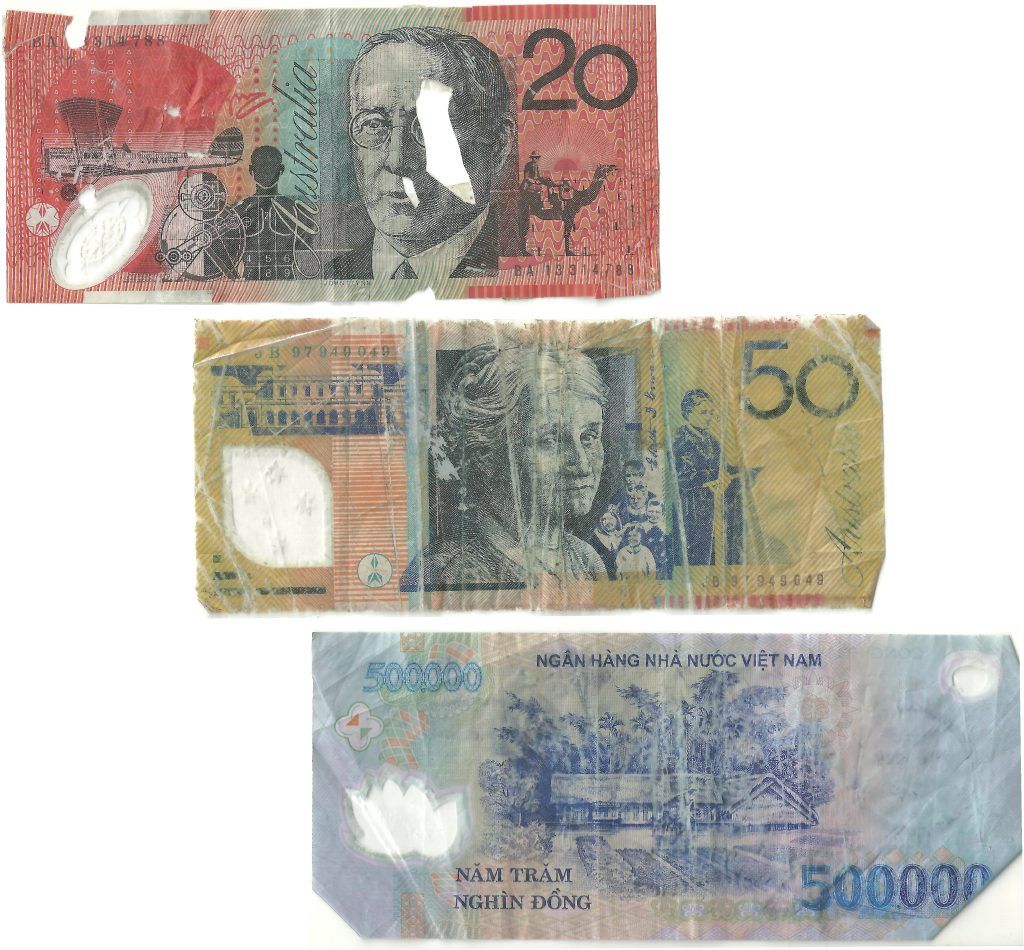
At Leftover Currency, we help customers exchange their foreign notes and coins for sterling. As part of our process, we handle banknotes in all sorts of conditions every day.
Some notes are damaged and cannot be processed in the normal way. In this guide, we explain what damaged banknotes are, how we assess them, and why some cannot be exchanged with us.
What is considered a damaged banknote?
A damaged banknote is any note that has been changed, marked, torn, stained, or worn to the point that it is no longer in good condition. In some cases, the damage is only cosmetic. In others, it can affect whether the note can be accepted for exchange.
Banks, exchange services, and cash handlers usually check the condition of every note to ensure that the note is genuine, complete, and still suitable for circulation or deposit. If a note is too badly damaged, it may be rejected.
Damaged banknotes can appear in many forms. Some of the most common examples include:
Tears and rips
A note with small tears may still be recognisable, but larger rips in notes cannot be accepted.
Holes
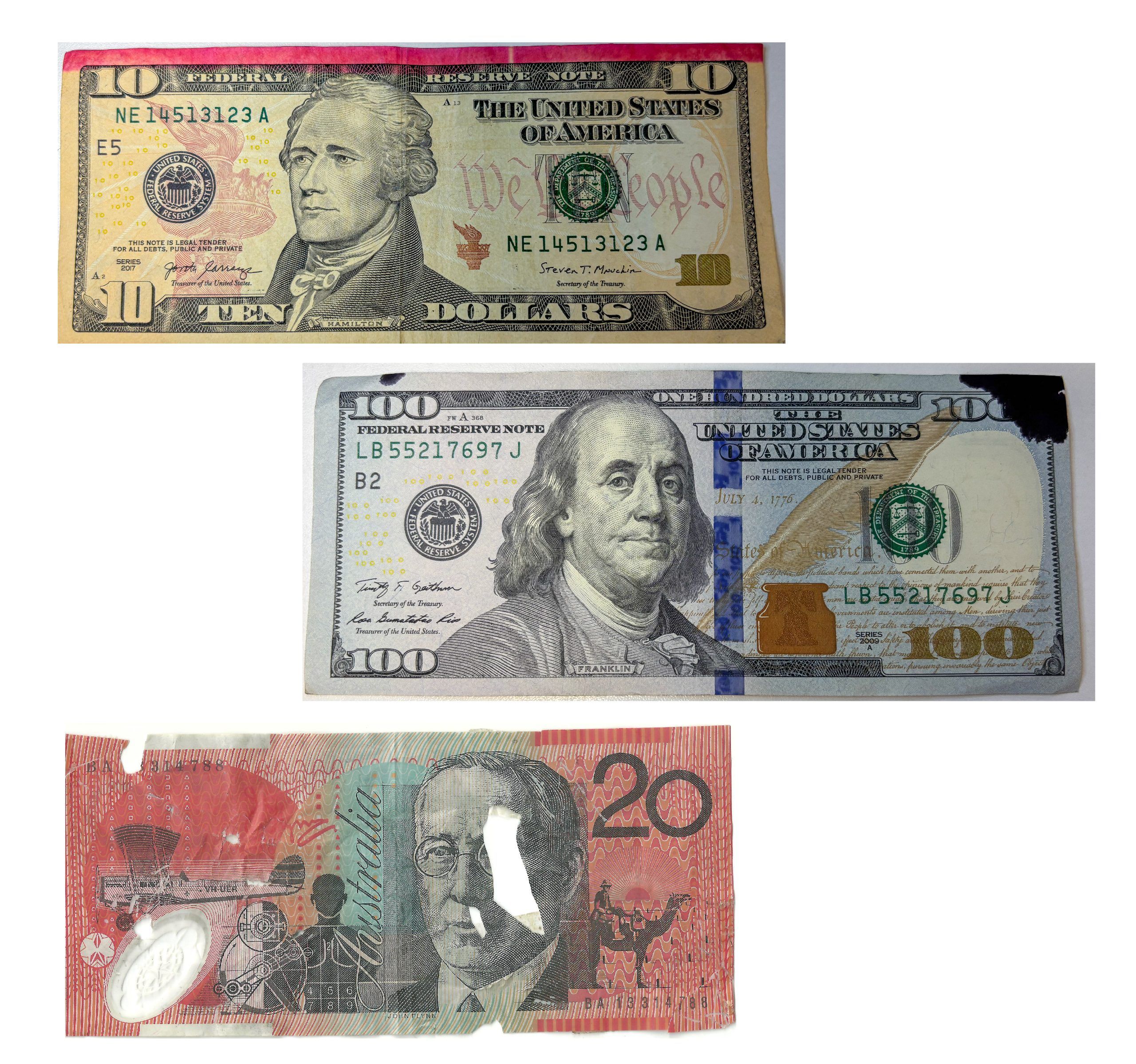
Holes in a banknote can range from small punctures to larger missing sections. Even if the rest of the note looks fine, missing pieces can affect whether it is accepted.
Heavy wear and tear
Banknotes that have been used for a long time often become very soft, faded, creased, dirty, or worn around the edges. General wear is normal, but severe wear where you cannot see the design of the note anymore makes it unfit for exchange.
Ink stains or discolouration
Some notes become stained by ink, water, oil, food, or other substances. Heavy staining can make security features harder to check and may raise concerns about the condition of the note.
Ink stains can sometimes show that a banknote has been marked by a security device, such as a dye pack used during a theft. As these notes may be connected to criminal activity, we cannot accept banknotes with this kind of staining.
Writing, markings, or scribbles
Notes with pen marks, written messages, stamps, or other markings are often treated as damaged. Even small amounts of writing can reduce the quality of the note.
Water or heat damage
Notes that have been soaked, washed, burnt, melted, or exposed to heat can become weak, shrunk, stuck together, or badly distorted. These notes cannot be processed.
Can I exchange damaged banknotes with Leftover Currency?
No, Leftover Currency does not accept damaged banknotes for exchange.
We are only able to accept banknotes that are in a suitable condition for processing. Our team reviews each submission before it moves through the next stage, and we can only handle notes that meet our condition requirements.
To keep our service safe and efficient, we only accept banknotes that are in good, exchangeable condition. If you are not sure whether your notes are suitable, please contact our team, and we will be happy to help.
What counts as a good condition for banknotes?
A banknote is usually considered to be in good condition when it is:
- Clean, complete, and easy to identify. It should still look like a normal note and show no major signs of damage.
- In most cases, a note in good condition should not have tears, holes, missing pieces, heavy creasing, stains, writing, or tape. It should also be free from serious wear and tear that could affect handling or inspection.
- A good quality banknote should still have its main design clearly visible. Important features, such as printed details and security elements, should remain intact and easy to check.
- Notes that are only lightly used may still be acceptable, as long as they are not badly marked or damaged. If a banknote looks heavily worn, altered, or incomplete, it is less likely to be accepted.
Ready to exchange your currency?
Got leftover coins or banknotes at home? Before sending them to us, please check that they are in good condition and suitable for processing.
If you are not sure what you have, contact our team, and we’ll be happy to help.